Arrow Blog

Bed Bugs are affecting all of us!

Good Night, Sleep Tight.  Don’t let the Bed Bugs Bite.

“Bed Bugs close building at John Jay college” - 9/24/09 New York Times

Rutgers University students living on Plum Street have welts and bites from severe Bed Bug infestations. 

A casino in Atlantic City was almost forced to close because of a severe Bed Bug infestation.

A top cruise line had a Bed Bug infestation on one of their vessels.

All of the above have happened very recently.  This Arrow news letter will hopefully give you some helpful information about bed bugs that you can use immediately. 

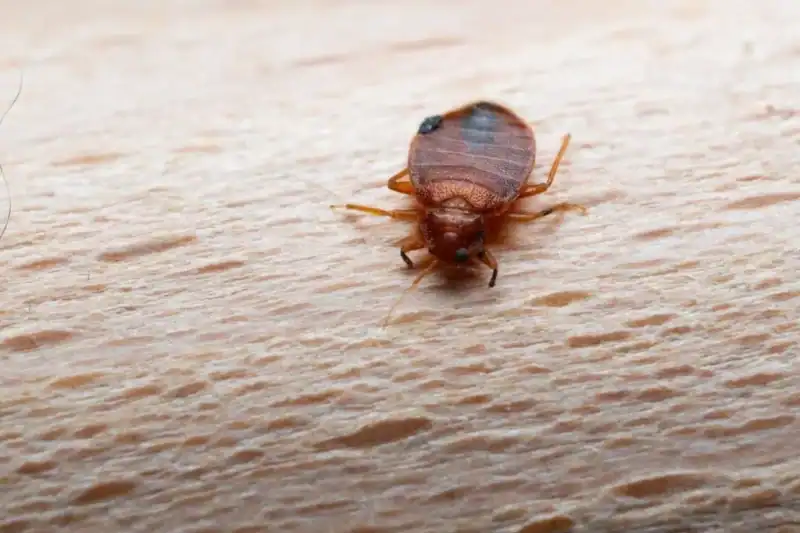
Bed Bugs are small insects that primarily come out at night and feed on the blood of their human hosts while they are sleeping.  They remain hidden for some time until another feeding is needed.  They can be found in any indoor environment.  Unfortunately, they are very difficult to detect because of the size of both the bugs and the eggs.  Bed Bugs leave a row of welts almost anywhere on the body. 

Encasing of mattresses and box springs in your home made especially for bed bugs is one important step you may wish to take.  Without encasements, it may take months to detect them as they can hide deep in the mattress or box spring.  Encasements are highly recommended for your children away at school.  There are sprays available for your luggage when you travel to help prevent bed bugs from invading.

We all look forward to vacations and making the best plans possible.  Unfortunately, bed bugs are now a threat to any travel itinerary.  Because bed bugs hide in small crevices, they may accompany your luggage home with you!  We are seeing this at alarming rates this year with travel, schools, and even people visiting your home. 

The following are some travel hints you may want to follow:

1.  Bring plastic bags with you when you travel to bring home any and all clothing so that it can go directly into the washer/dryer when you return home.

2.  Keep your luggage off of the bed at all times.  Keep luggage on a rack or in the bath tub as bed bugs will not be in the bathroom.

3.  Whether you are going to stay at the 4 Seasons or Motel 6 always bring a small flashlight with you to inspect the mattress/box spring for black staining on the seams and welting of the bed.  Check the headboard if possible for bugs or black staining.  Check the furniture drawers for live bugs or dead bugs. 

4.  If you do see something suspicious, change your room immediately.  Not all rooms are infested with bed bugs. 

5.  Use great care when returning home.  Try to unpack in your garage since all clothing should be in bags at that point.  Treat your luggage with Rest Easy Bed Bug Spray, and store your luggage in plastic bags in the attic or garage only.

6.  If you have any problems when you do return home or are uncertain whether or not you do have a bed bug infestation, contact us immediately.

Arrow can provide Bed Bug proof mattress and box spring encasements and Rest Easy Bed Bug Spray!  Call us for details or e-mail info@arrownj.com

Radon Gas Alert!

When was the last time you had your home tested for Radon Gas?

Are you protecting your family?  Radon is a radioactive gas that comes from the breakdown of naturally occurring uranium in soil and rock.  It is invisible, odorless, and tasteless, and can only be detected by specialized tests.  Radon enters homes through openings that are in contact with the soil, such as cracks in the foundation, small openings around pipes, and sump pits.  Once inside an enclosed building or home, Radon and Radon Progeny can accumulate to dangerous levels.  The more Radon you are exposed to, and the longer the exposure, the greater the risk to you and your family.  Radon is the second leading cause of lung cancer in the U.S., resulting in 15,000 to 20,000 deaths per year.

Testing your home for Radon is easy, and homes with high levels of Radon can be mitigated.  The New Jersey DEP recommends that all homes be tested for Radon.

Digger or Ground Bees Arrive Early this Year!

Arrow is reporting that we had 3 sightings of solitary ground bees at different locations yesterday!

INTRODUCTION:  The common name comes from the fact that these are solitary and not social bees, and that they usually nest in the ground while some use natural cavities.  These solitary bees can become urban nuisance pests when they nest in large numbers near structures, and they can sting.  They are found througout the U.S. 

BIOLOGY:  These are solitary bees which do not live in colonies.  Adults are queens or males.  Digger bee burrows are made in the ground, usually consisting of a long vertical tunnel with lateral branches off of each tunnel to each cell.  Sometimes large numbers of these bees will nest close together, particularly in in bare-ground areas.  They provision each cell with pollen and nectar.  Both sexes overwinter in the nests. 

CONTROL:  These are beneficial insects and control should be made only if the problem is in range of people or homes/buildings.  If control is necessary, Pest Control Professionals would use a dust formulation chemical in the bare nesting areas.  Pyrethroid chemicals are particularly effective as well.

As a customer, you should be advised to eliminate all bare-ground areas as a long-term solution to discourage these bees from returning.

Bed Bugs Draw DEP Meeting

Washington, DC; March 17,2009 — Bed Bugs have become such a problem, federal officials will hold a summit in Washington next month.  The Environmental Protection Agency called the meeting to share information and ideas on how to stop the pests that are plaguing hotels, colleges, homes, and businesses.

Some years ago, health officials thought they’d been eradicated, but there’s been a strong resurgence of the pests.

The forum is expected to draw state and local government agencies, health and housing officials, researchers, college officials, as well as those in the pest management industry.

Just last week, New York City created a task force on the issue, in light of 10,000 complaints filed in the last year.  That’s double the number from one year earlier.

Termite Swarming Season is here!

Termite Swarming season is here.

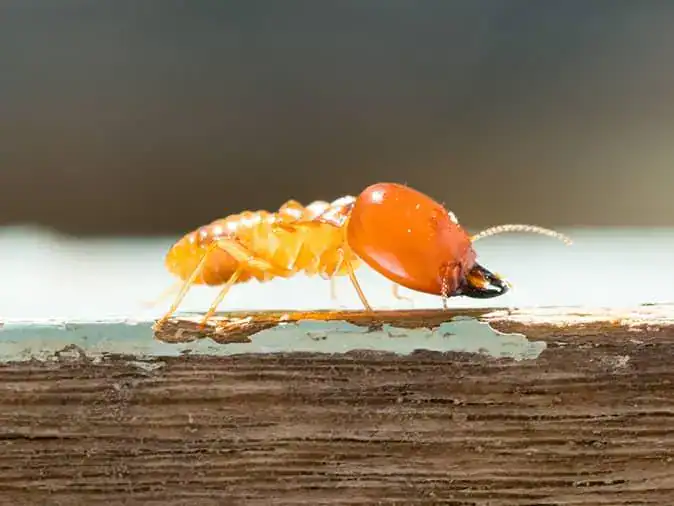
Termite Swarmers, or winged reproductive termites leave the colony once a year and swarm to a different location where they shed their wings and pair up to start a new termite colony.

Winged termites are often mistaken for winged ants.  Here’s how to tell them apart.  Ant wings are different sizes; termite wings are all the same size.  Ants have elbowed antennae; termites have short, straight, beaded antennae.  Don’t be fooled by color or size:  Ants can vary in size, and winged termites can be brown or black.  The most glaring difference is that ants have segmented body parts and termite swarmers have one straight body.

Termite swarmers mean that you have an active termite infestation on your hands.  Call today for a free estimate.

Stink Bugs Invade New Jersey

This bug has become a nuisance pest both indoors and outdoors when it is attracted to the outside of homes on warm fall days in search of protected, overwintering sites.  It reappears during the winter during warmer sunny periods, and again as it emerges in the spring.

Before Bugs Enter a Home or Building:  Mechanical exclusion is the best method to keep stink bugs from entering.  Cracks around windows, doors, siding, utility pipes, behind chimneys, and underneath the wood fascia and other openings should be sealed with good quality silicone or silicone-latex caulk.  Damages screens on doors and windows should be repaired or replaced.

Exterior applicationsof insecticides may offer some relief from infestations where the task of completely sealing the exterior is impossible.  Applications should consist of a synthetic pyrethroid and should ONLY BE APPLIED BY A LICENSED PEST MANAGEMENT PROFESSIONAL in the fall just prior to bug congregation.  Unfortunately, because insecticides are broken down by sunlight, the residual effect of the material will be greatly decreased and may not kill the insects much beyond serveral days or a week.

Arrow Achieves Quality Pro Green Status

We are very proud to announce that we have been designated a Quality Pro Green Company by the National Pest Management Association.  Quality Pro is the mark of excellence in Pest Management.

Green has become a hot topic and the world is rapidly embracing green products, services, and ideas.  In fact, research shows that 61% of consumers are seeking pest control services that are green.  The National Pest Management Association and the Quality Pro Board of Directors determined that the creation of Quality Pro Green certification Program would not only recognize a pest management firm’s exceptional professional services with industry standards, but also provide the customer with faith that the company was truly practicing green pest control.

Summer Travel Season = Bed Bug Alert

Are you travelling with the family the last 2 weekends of the summer season.  Beware of the travelling bed bug when coming home.

Bed bugs will attach themselves to luggage, clothing, and human beings to be transported back home with you.  Be cautious of this most unwanted pest!!!!!!!!